VMPL
Gurugram (Haryana) [India], January 27: With shared vision of building a future-ready generation, BMW Group and UNICEF today highlighted the annual impact of their global BRIDGE partnership in India. Since its launch in December 2024, the initiative has reached around 110,216 children and 397 educators in India across multiple states by strengthening foundational learning and expanding access to hands-on STEM education.
The BRIDGE initiative is part of a long-term global collaboration between BMW Group and UNICEF till 2030, aimed at equipping children with future-ready skills through supporting state governments on STEM education (Science, Technology, Engineering and Mathematics). In India, the programme adopts a two-pronged approach to education reform - strengthening foundational literacy and numeracy in early grades, and expanding access to practical, experiential STEM learning for adolescents.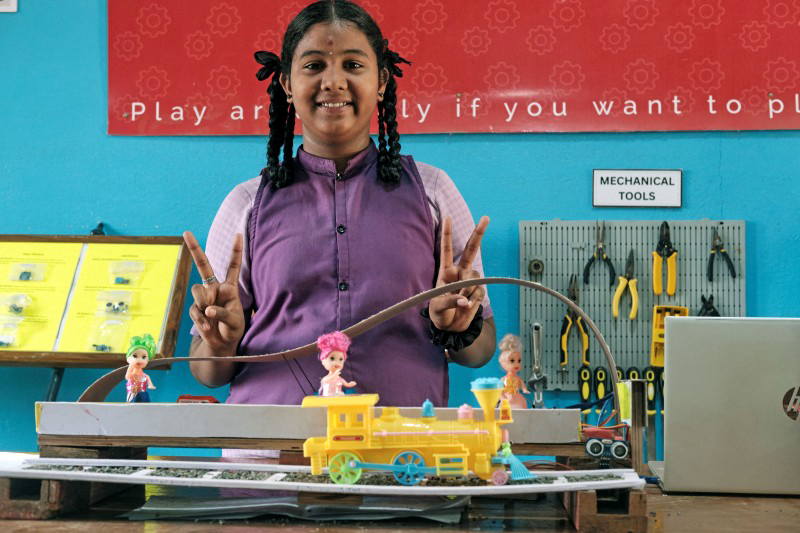
Implemented in close collaboration with state governments, the initiative is currently active across Jharkhand, West Bengal, Assam and Tamil Nadu. The programme creates inclusive STEM learning environments through strengthening teacher capacity and experiential learning using low-cost maker spaces, STEM kits, and new science labs in under-served schools.
Commenting on the partnership, Mr. Hardeep Singh Brar, President and CEO, BMW Group India, said, "The BMW Group's global partnership with UNICEF underscores our commitment to education as a catalyst for lasting social and economic progress. In India, we are proud of the strides made in strengthening foundational learning and creating opportunities for children, especially girls, to explore STEM. We remain dedicated to supporting scalable, high-impact initiatives that empower the next generation for a brighter future. Through the long-term programme spread over several years, we will ensure that this progress goes a long way towards creating real, on-ground impact."
Ms. Cynthia McCaffrey, UNICEF India Representative said, "Today's employment opportunities come with greater demands for competencies in STEM. Girls, in particular, miss out on opportunities to learn and practice STEM. For this very reason, the BMW-UNICEF partnership is investing in making education more accessible and inclusive, especially for girls, leading to greater economic and social self-reliance." 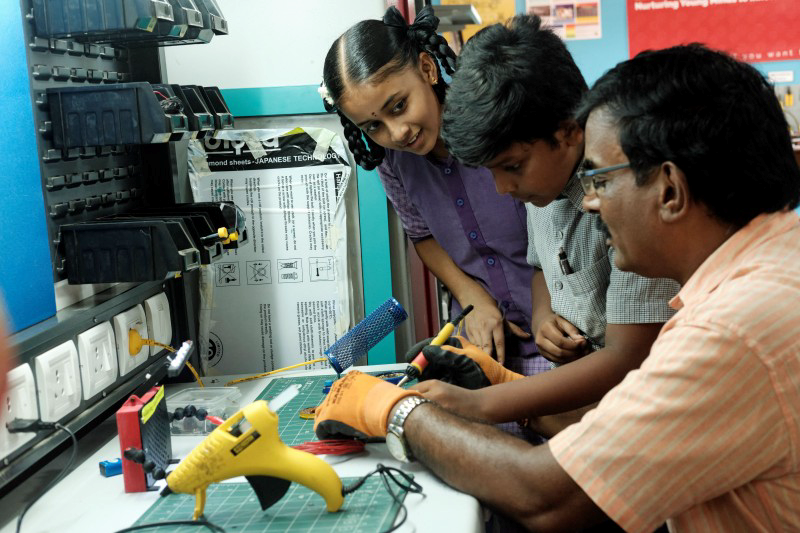
During the first year of implementation, the partnership delivered measurable outcomes on ground. A total of 397 educators across 142 schools were trained in evidence-based practices to improve early-grade literacy and numeracy, while large-scale digital webinars reached 17,830 teachers, strengthening classroom instruction and foundational pedagogy at scale. A situational analysis helped develop a state-level action plan to strengthen supervisory systems. The engagement of parents and caregivers was successfully strengthened through regular meetings, fostering closer home home-school collaboration.
West Bengal
In West Bengal, a STEM Instructional Manual with 90 experiential activities was developed, including the use of household items to explain fractions and 10 maker spaces were set up. A digital supervision app now tracks classroom practices such as inclusion, use of learning materials, creating a safe and engaging environment, and encouraging active participation. Supervisors use the app's data to give feedback and plan improvements with teachers. Since October 2024, over 8,000 school visits have been logged. In addition, large-scale events, like the International Day of Women and Girls in Science, engaged nearly 59,000 students, promoting gender equity.
Assam
Hands-on STEM content was successfully piloted in 30 schools, reaching over 7,000 students in Assam. Classroom observations and teacher surveys were carried out to inform the redesign of difficult topics. Interactive learning packages were piloted, including experiments using local materials to explain concepts like motion and fractions.
Jharkhand
Evidence points out that children learn best when taught in their most familiar language. To help children do so, the development of bilingual textbooks for Grades 1 and 2 in Assam and Jharkhand was supported. These books align with the state curriculum and reflect local contexts, enabling a smooth transition from home language to the language used at school. Jharkhand also received support to equip 11 STEM labs in girls' residential schools (KGBVs) and distribute STEM kits in 82 KGBVs. STEM kits give students the chance to learn through practical experiments. With simple tools like soldering irons, batteries, and other basic components, these kits make science and technology more accessible and engaging. They help strengthen problem problem-solving skills and spark curiosity, turning abstract concepts into real-world applications. Moreover, 130 activity activity-based modules were developed for hard hard-to-learn topics such as algebra and molecular structures, using clay modelling, bead-and-wire models, and local art forms for geometry.
Tamil Nadu
The 'STEM on Wheels' programme brought mobile demonstrations of science and math experiments to schools in rural and coastal areas, enabling hands-on learning.
Globally, the BMW Group-UNICEF partnership aims to reach more than 10 million children and young people every year through education and training initiatives, including STEM learning, across five countries where BMW Group has a strong operational presence - India, South Africa, Brazil, Mexico, and Thailand.
The BMW Group
With its four brands BMW, MINI, Rolls-Royce and BMW Motorrad, the BMW Group is the world's leading premium manufacturer of automobiles and motorcycles and also provides premium financial services. The BMW Group production network comprises over 30 production sites worldwide; the company has a global sales network in more than 140 countries.
In 2024, the BMW Group sold over 2.45 million passenger vehicles and more than 210,000 motorcycles worldwide. The profit before tax in the financial year 2024 was EUR 11.0 billion on revenues amounting to EUR 142.4 billion. As of 31 December 2024, the BMW Group had a workforce of 159,104 employees.
The economic success of the BMW Group has always been based on long-term thinking and responsible action. Sustainability is a key element of the BMW Group's corporate strategy and covers all products from the supply chain and production to the end of their useful life.
www.bmwgroup.com
LinkedIn: http://www.linkedin.com/company/bmw-group/
YouTube: https://www.youtube.com/bmwgroup
Instagram: https://www.instagram.com/bmwgroup
Facebook: https://www.facebook.com/bmwgroup
X: https://www.x.com/bmwgroup
About UNICEF
UNICEF works in some of the world's toughest places, to reach the world's most disadvantaged children. Across more than 190 countries and territories, we work for every child, everywhere, to build a better world for everyone. For more information about UNICEF and its work for children visit www.unicef.org
Follow UNICEF on Twitter, Facebook, Instagram and YouTube
For more information, please contact:
BMW Group:
Richa Sharma, Head of Press and Corporate Affairs
Cell: +91 99100 22148; Email: Richa.Sharma@bmw.in
UNICEF India:
Alka Gupta, Communication Specialist, +91 730 325 9183, agupta@unicef.org
Sonia Sarkar, Communication Officer (Media), +91 9810170289, ssarkar@unicef.org
(ADVERTORIAL DISCLAIMER: The above press release has been provided by VMPL. ANI will not be responsible in any way for the content of the same.)